

Launching a custom silicone product line involves more than finding a supplier that can manufacture products in bulk. Brands need to consider product design, material selection, mold development, sampling, logo customization, conditionnement, and production consistency. Choosing the right silicone products factory with OEM service can help simplify these stages and turn a product concept into a market-ready item.
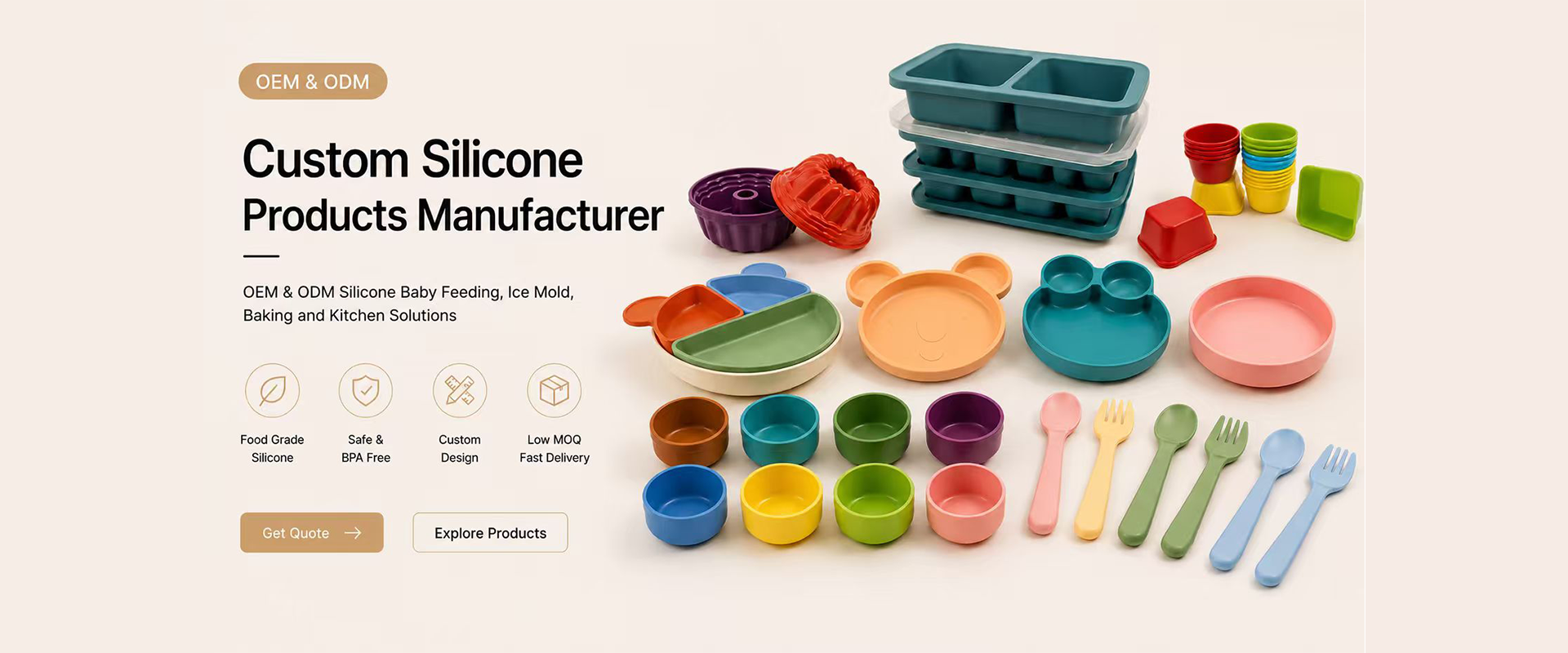
For kitchenware, bakeware, produits d'alimentation pour bébé, and other silicone goods, OEM and ODM manufacturing offer different levels of customization. OEM services generally focus on producing products according to a buyer’s specifications, while ODM services can provide additional support with product design and development.
Understanding how the manufacturing process works helps importers, grossistes, détaillants, and private-label brands evaluate suppliers more effectively. This guide explains the key stages of custom silicone product manufacturing and the questions buyers should ask before placing a bulk order.
1. What Are OEM and ODM Silicone Manufacturing Services?
OEM and ODM are two common cooperation models in the silicone products industry. Both support brand customization, but they differ in how product concepts and designs are developed.
What Is OEM Silicone Manufacturing?
OEM stands for Original Equipment Manufacturing. Under an OEM arrangement, the buyer usually provides the product design, drawings, dimensions, material requirements, or reference samples. The factory manufactures the product according to the confirmed specifications.
Typical OEM customization options include:
- Product dimensions and structural details
- Silicone material and hardness
- Product color and color combinations
- Logo printing, embossing, or debossing
- Custom mold development
- Retail and private-label packaging
Par exemple, a kitchenware brand may provide a design for a custom silicone spatula or baking mold. The manufacturer evaluates the design, develops the required tooling, produces samples, and proceeds with bulk manufacturing after approval.
What Is ODM Silicone Manufacturing?
ODM stands for Original Design Manufacturing. It generally involves more product development support from the manufacturer.
Instead of providing a complete design, buyers may share a product concept, intended application, target market, or reference image. The factory can then provide suggestions for product structure, mold design, material selection, and packaging.
ODM services can be useful for brands that want to expand their product ranges without managing every technical development stage internally.
OEM vs. ODM: Which Model Should Buyers Choose?
| Comparison | OEM Manufacturing | ODM Manufacturing |
|---|---|---|
| Initial input | Buyer-provided design or specifications | Product concept or development requirements |
| Design responsibility | Mainly buyer-led | More manufacturer involvement |
| Mold development | Based on confirmed design | May include design optimization |
| Personnalisation | Dimensions, materials, couleurs, logos, conditionnement | Product structure and other customization options |
| Suitable for | Established products and brand-specific designs | New product development and range expansion |
The best cooperation model depends on the buyer’s design resources, product development goals, and customization requirements. Some projects may also combine OEM and ODM services at different stages.
2. The Complete OEM Silicone Product Manufacturing Process
A reliable manufacturing process should establish clear requirements before production begins. Each stage helps reduce misunderstandings, control product specifications, and improve consistency across bulk orders.
Étape 1: Confirm Product Requirements
The first step is to define what the product needs to do and how it will be sold.
A buyer should prepare as much relevant information as possible, y compris:
- Product type and intended application
- Reference images, drawings, or samples
- Product dimensions and weight requirements
- Material and hardness preferences
- Target colors and logo requirements
- Packaging specifications
- Estimated order quantity
- Destination market and applicable compliance requirements
Par exemple, a custom silicone baking mold may require specific cavity dimensions, épaisseur de paroi, flexibilité, and demolding performance. A baby feeding product may require additional attention to product design, food-contact documentation, and age-related safety considerations.
Providing clear requirements at the beginning helps the factory assess feasibility and prepare a more accurate manufacturing proposal.
Étape 2: Develop the Product and Mold Design
After confirming the requirements, the manufacturer evaluates the product structure and mold design.
Mold development is a critical part of custom silicone manufacturing because it directly affects product dimensions, surface details, production efficiency, and repeatability.
Important design considerations include:
Product structure: The design should consider wall thickness, edges, corners, cavity geometry, and functional details.
Mold structure: Mold design should account for the product’s shape, demolding requirements, and manufacturing method.
Material behavior: Silicone flexibility, hardness, and shrinkage behavior should be considered during tooling development.
Production feasibility: Complex shapes or detailed patterns may require additional mold adjustments and sample evaluation.
For custom baking molds, for instance, cavity depth and corner design can influence how easily baked goods are released. For silicone baby plates, the structure and suction base may need to be evaluated together.
A professional custom silicone mold manufacturer should discuss these factors before finalizing the tooling solution.
Étape 3: Select the Right Silicone Material
Material selection affects the product’s flexibility, durabilité, appearance, and suitability for its intended application.
Food-grade silicone is commonly used in kitchenware, bakeware, produits d'alimentation pour bébé, and food storage accessories. Cependant, buyers should not assume that every silicone material is suitable for every application.
Key material considerations include:
| Material Consideration | What Buyers Should Evaluate |
|---|---|
| Food-contact suitability | Relevant test reports and compliance documentation for the target market |
| Hardness | Whether the product needs flexibility, firmness, or structural support |
| Temperature performance | Whether the material suits the intended heating, freezing, or storage conditions |
| Odor and appearance | Material quality, curing process, and finished-product consistency |
| Durabilité | Resistance to repeated use, deformation, and normal cleaning conditions |
| Color stability | Whether the selected color meets the brand’s appearance requirements |
Buyers should communicate the intended application and destination market before material confirmation. Compliance requirements can differ by country, product category, and specific use conditions.
A food-grade material description alone does not replace product-specific testing or regulatory documentation.
Étape 4: Produce Samples and Confirm Product Details
Before mass production, samples allow buyers to evaluate whether the proposed design and manufacturing solution meet their expectations.
A sample review should cover more than general appearance.
Recommended checkpoints include:
- Dimensions and weight
- Product shape and structural details
- Surface finish and edge quality
- Color accuracy
- Logo position and clarity
- Flexibility and hardness
- Functional performance
- Packaging appearance
Par exemple, a silicone ice cube tray should be evaluated for cavity consistency, flexibilité, and ease of releasing ice. A silicone baking mold should be checked for dimensional accuracy, stability, and demolding performance.
If the sample does not meet the agreed specifications, the buyer and manufacturer should document the required adjustments before approving the final version.
Sample approval is an important production control point. Buyers should retain an approved reference sample or a complete specification record to support later bulk inspections and repeat orders.
Étape 5: Customize Colors, Logos, and Packaging
Brand identity is an important part of private-label silicone products. A capable OEM supplier should offer customization options that align with the product’s design and positioning.
Custom Silicone Product Colors
Color customization may include:
- Pantone color matching
- Single-color production
- Multi-color designs
- Seasonal color development
- Brand-specific color combinations
Buyers should confirm the acceptable color tolerance and evaluate a physical sample where color accuracy is important. The final appearance can be affected by the silicone material, production conditions, and product structure.
Custom Logo Branding
Common logo options include:
- Silk screen printing
- Embossed logos
- Debossed logos
The most suitable method depends on the product surface, logo complexity, taille, and expected use conditions.
Par exemple, an embossed logo may be suitable for a silicone spatula handle, while screen printing may work for certain flat surfaces. Buyers should test logo clarity and durability on the actual product.
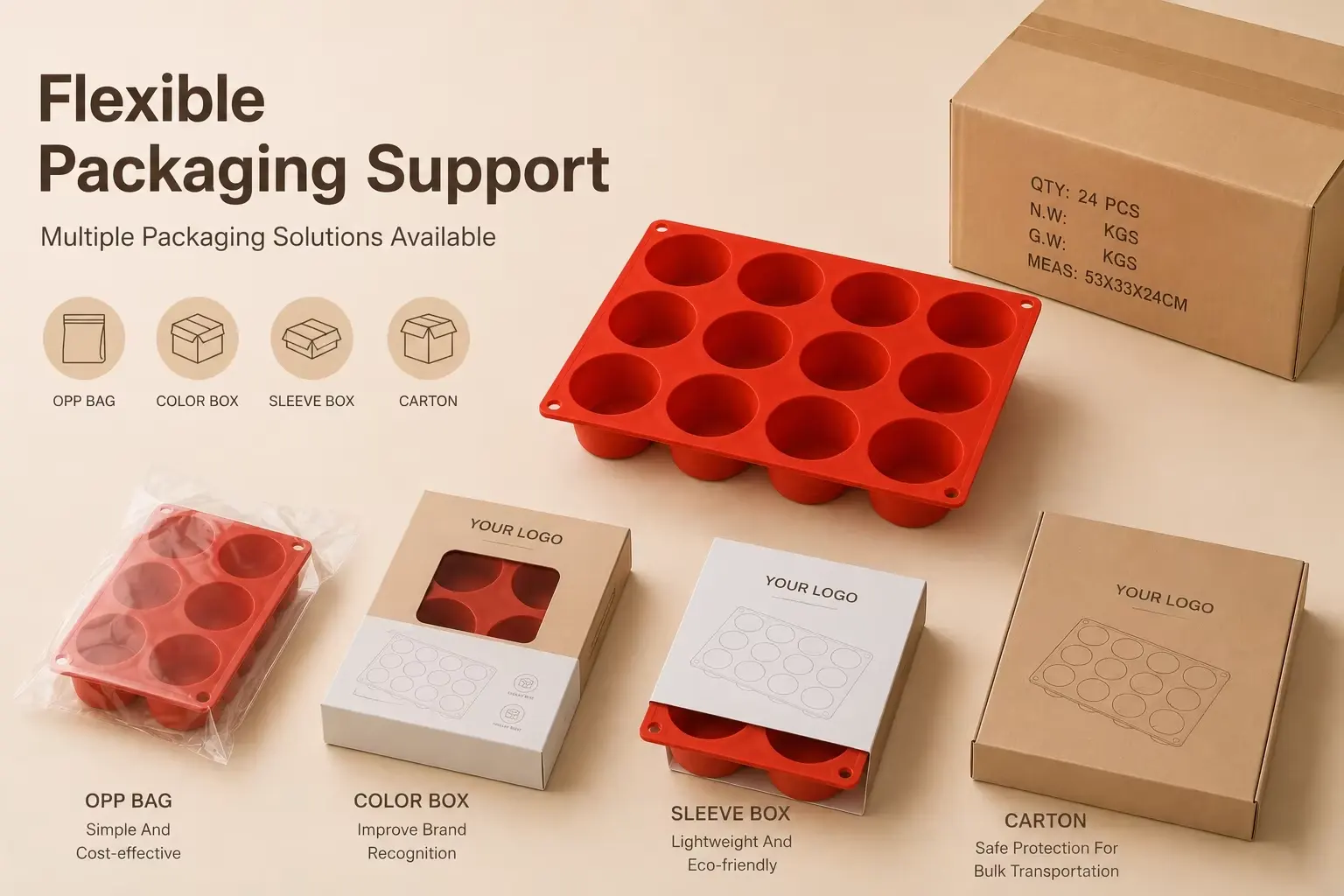
Private Label Packaging Solutions
Packaging helps protect products during transportation and presents the brand at retail or online.
Common options include:
- OPP bags
- Color boxes
- Kraft paper boxes
- Customized gift boxes
- Barcode labels
- E-commerce-ready packaging
- Carton packaging
Packaging requirements should be confirmed before bulk production. Buyers should also consider product dimensions, shipping protection, retail display, and destination-market labeling requirements.
Étape 6: Arrange Mass Production
Once the sample and specifications are approved, the factory can arrange bulk production.
Before manufacturing begins, both parties should confirm the final production details, y compris:
- Approved product drawings or sample reference
- Material and hardness requirements
- Color specifications
- Logo design and position
- Order quantity
- Packaging requirements
- Quality inspection criteria
- Production and delivery schedule
For larger orders, buyers should ask how the factory manages material batches, production records, and in-process quality checks.
A documented production standard helps reduce variations between different batches and makes repeat purchasing easier.
Étape 7: Quality Inspection and Delivery
Quality inspection should take place before products are packed and shipped.
For custom silicone products, inspection can include:
| Inspection Area | Suggested Checkpoints |
|---|---|
| Appearance | Surface defects, contamination, uneven color, and visible damage |
| Dimensions | Product length, width, height, and critical structural measurements |
| Function | Flexibility, fit, suction, or other product-specific functions |
| Logo | Position, clarity, and consistency |
| Conditionnement | Correct labels, quantities, and packaging condition |
| Order quantity | Actual quantity against the purchase order |
The inspection criteria should reflect the product’s intended application and agreed specifications. Food-contact products may also require relevant documentation and testing beyond visual inspection.
After inspection and packing, shipment can be arranged by sea, air, or express according to the order requirements.
Yongcheng’s published OEM/ODM service process follows these six main stages: requirements, design solution, sample approval, mass production, quality inspection, and delivery.
3. Which Silicone Products Can Be Customized?
A silicone products factory with OEM service may support different product categories, depending on its tooling, materials, and production capabilities.
For brands in the kitchenware and food-contact product market, common customization opportunities include:
Silicone Baking Molds
Silicone baking molds are used for cakes, bread, muffins, chocolats, and other baked or molded foods.
Common customization requirements include cavity shapes, dimensions, mold thickness, couleur, and branding. Buyers should pay particular attention to demolding performance, dimensional consistency, and suitability for the intended baking conditions.
Silicone Kitchenware and Utensils
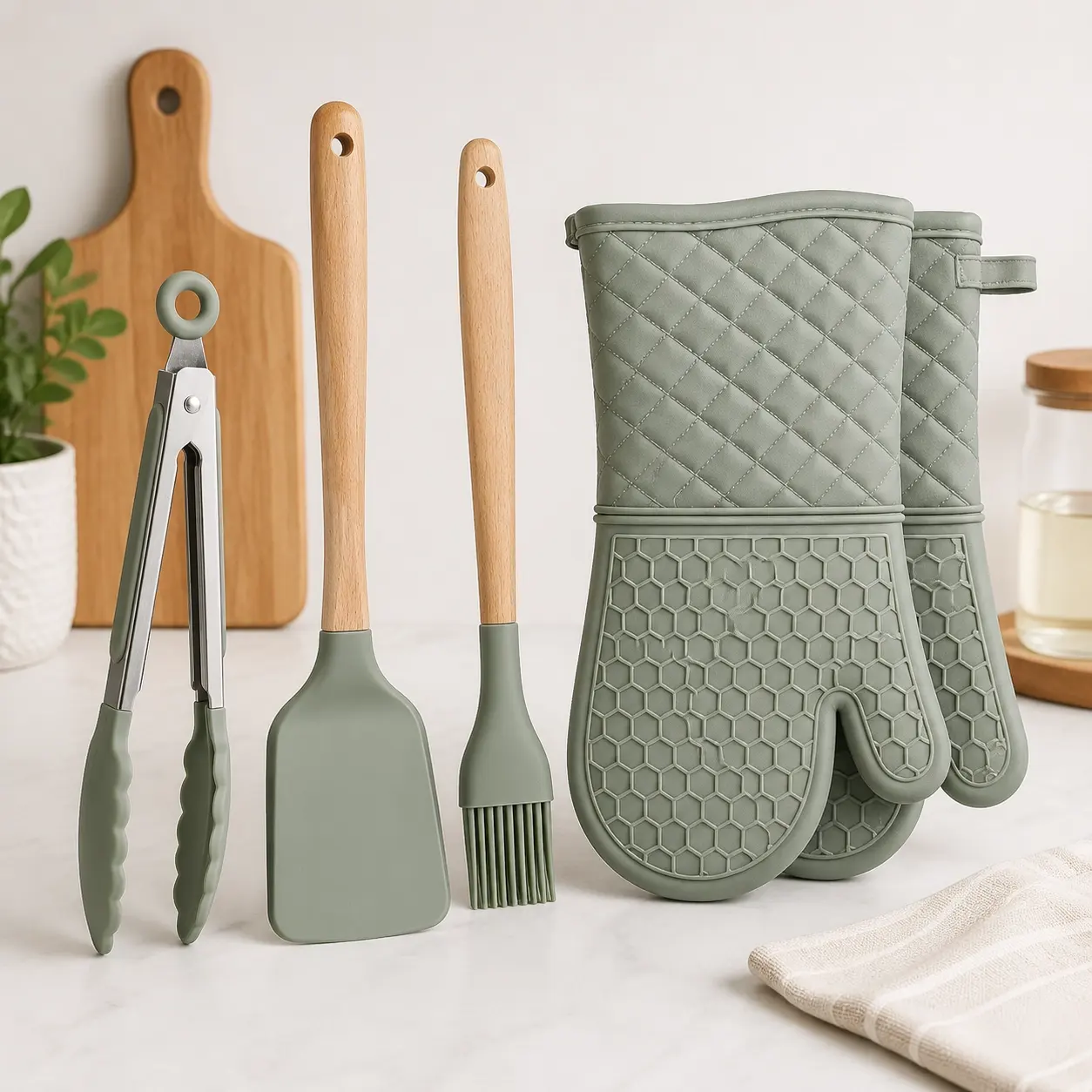
Products such as spatulas, cooking spoons, tongs, and oil brushes can be customized for retail collections and kitchenware brands.
Important factors include handle design, flexibilité, surface finish, color coordination, and packaging.
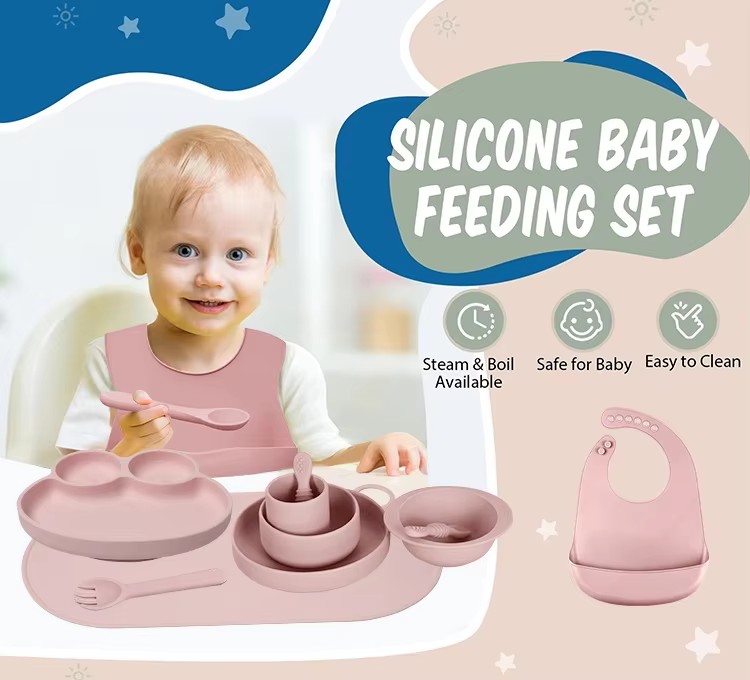
Silicone Baby Feeding Products
Baby plates, bowls, cups, bibs, and feeding sets are common product categories for private-label development.
Buyers should evaluate product structure, age suitability, material documentation, exigences de nettoyage, and applicable food-contact or child-product regulations.
Silicone Ice Cream and Food Storage Products
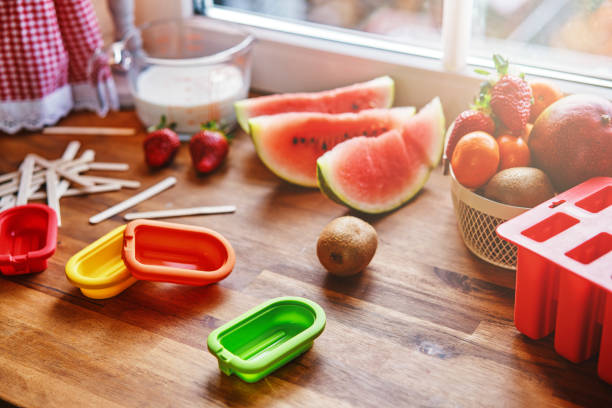
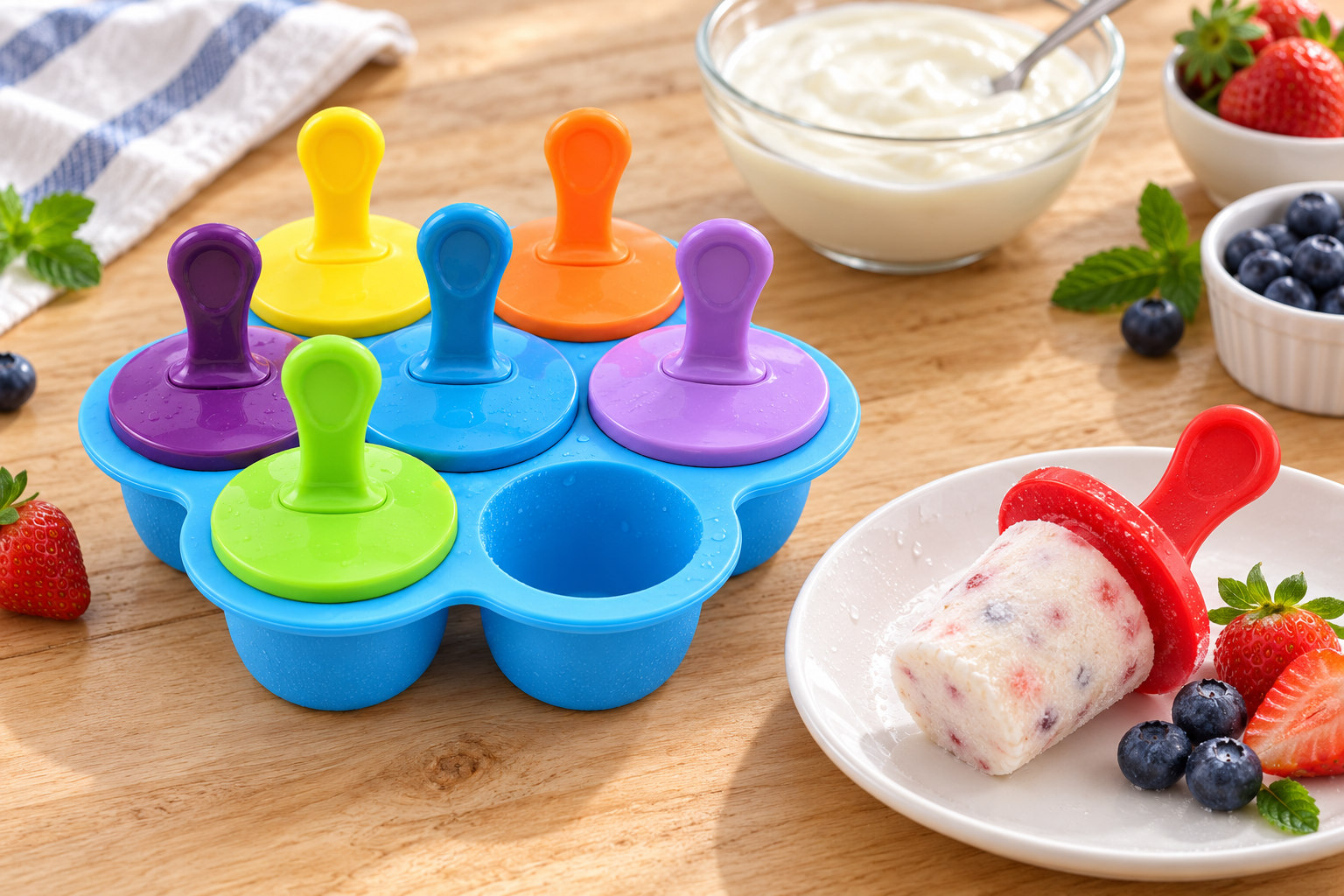
Ice cube trays, popsicle molds, food covers, and storage containers offer opportunities for functional and visual customization.
Product development may focus on cavity design, lid fit, stackability, storage convenience, and ease of cleaning.
The right product category depends on the brand’s target customers, sales channels, and market positioning. Buyers should confirm the manufacturer’s actual product and tooling capabilities before selecting a project.
4. How to Choose a Reliable Silicone Products Factory with OEM Service
Selecting a supplier is not simply a matter of comparing quotations. Buyers should evaluate whether the factory can support the complete product development and manufacturing process.
Evaluate Product Development and Mold Capabilities
Ask whether the factory can review drawings, optimize product structures, develop molds, and support sample adjustments.
This is especially important for products with complex shapes, multiple cavities, or specific functional requirements.
Confirm Material Control and Documentation
For food-contact silicone products, ask for relevant material information and compliance documents for the target market.
Depending on the product and destination, buyers may need to review applicable food-contact regulations, test reports, and supporting documentation.
Do not rely only on general descriptions such as “food grade” or “BPA-free.” Verify that the documents apply to the actual product and material being supplied.
Review Customization Options
A supplier’s customization capabilities should match the brand’s requirements.
Confirm whether the factory supports:
- Custom dimensions and product structures
- Mold development
- Pantone color matching
- Multi-color production
- Logo printing or molded logos
- Custom packaging
- Product set or combination customization
Understanding MOQ and Production Planning
Minimum order quantity can vary according to the product, mold requirements, couleurs, and packaging.
Stock products may have different order conditions from newly developed custom products. Multi-color designs or special packaging may also affect production planning.
Ask for a quotation that separates tooling, sampling, unit production, conditionnement, and other relevant costs where applicable.
Check Quality Control and Communication
A reliable supplier should be able to explain its inspection process and how it manages product specifications from sample approval to final delivery.
Buyers should also assess communication efficiency, documentation quality, sample feedback, and the supplier’s ability to handle specification changes.
A clear process is often more valuable than an attractive initial quotation that leaves important production details undefined.
5. What Information Should Buyers Prepare Before Requesting an OEM Quote?
Preparing a complete inquiry helps manufacturers evaluate the project and provide more useful feedback.
| Information | Details to Provide |
|---|---|
| Product concept | Product name, application, and reference images |
| Design files | Drawings, dimensions, 3D files, or physical samples if available |
| Matériel | Food-grade silicone or other specified material requirements |
| Product specifications | Taille, weight, hardness, thickness, and functional details |
| Couleur | Pantone number or physical color reference |
| Logo | Artwork, taille, position, and preferred branding method |
| Conditionnement | Packaging type, label, barcode, and artwork |
| Quantity | Estimated order quantity and expected repeat-order volume |
| Destination market | Country or region where the product will be sold |
| Compliance | Applicable testing, documentation, and regulatory requirements |
If some details are not yet available, buyers can begin with a product concept and reference images. The manufacturer can then assess what additional information is needed for design and quotation.
6. Common Mistakes to Avoid in Custom Silicone Product Development
Even with an experienced manufacturer, incomplete project requirements can lead to delays, extra costs, or products that do not match the original expectations.
Focusing Only on Unit Price
A low unit price does not necessarily mean a lower total project cost. Tooling, sample revisions, conditionnement, testing, and shipping may all affect the final budget.
Compare quotations using the same product specifications and cost breakdown.
Skipping Sample Approval
Moving directly to bulk production without confirming a sample increases the risk of differences in dimensions, couleur, logo details, and product functionality.
Always establish an approved sample or documented specification before production.
Overlooking Market Compliance
A product intended for one market may need different documentation or testing when sold in another country.
Define the destination market early and confirm the applicable requirements with the manufacturer and relevant compliance professionals.
Leaving Packaging Details Until the End
Packaging affects product protection, labeling, shipping volume, and retail presentation.
Confirm packaging specifications during product development rather than after manufacturing has started.
Failing to Document Approved Specifications
Verbal agreements can create misunderstandings during repeat orders.
Keep approved drawings, samples, spécifications matérielles, color references, packaging artwork, and inspection standards in a shared project record.
7. Frequently Asked Questions About OEM Silicone Manufacturing
Q1: What is the difference between OEM and ODM silicone products?
OEM manufacturing generally follows buyer-provided designs and specifications. ODM manufacturing includes more support from the supplier in product design and development. The appropriate model depends on the buyer’s internal resources and project requirements.
Q2: Can a silicone products factory customize product colors and logos?
Yes, customization may include Pantone color matching, multi-color production, silk screen printing, embossed logos, and debossed logos. Available methods depend on the product structure and surface.
Q3: Can I develop a custom silicone product from an idea or reference image?
Many OEM/ODM manufacturers can evaluate a product concept or reference image and provide suggestions for product structure, mold development, and packaging. Technical drawings or additional specifications may be needed before tooling begins.
Q4: What is the MOQ for custom silicone products?
MOQ depends on the product type, mold requirements, material, couleurs, conditionnement, and production arrangement. Stock products and fully customized products may have different MOQ requirements. Buyers should request a project-specific quotation.
Q5: Can I receive samples before placing a bulk order?
Sample production is a common step in OEM manufacturing. Buyers can review product dimensions, couleur, logo, functionality, and packaging before approving mass production.
Q6: What information is needed to request a custom silicone product quotation?
Prepare the product concept, reference images or drawings, dimensions, material requirements, couleur, logo, conditionnement, estimated quantity, and destination market. More complete specifications help the factory evaluate the project more accurately.
Q7: How long does custom silicone product manufacturing take?
The schedule depends on mold development, sample revisions, order quantity, customization requirements, and the factory’s production plan. Buyers should request separate estimates for tooling, sampling, mass production, and shipment.
Conclusion: Build a More Reliable OEM Silicone Product Supply Chain
Successful custom silicone manufacturing depends on coordination across product design, mold development, material selection, sample approval, personnalisation, mass production, and quality inspection. Each stage contributes to the final product’s performance, appearance, and consistency.
For brands and wholesalers, choosing a silicone products factory with OEM service should involve more than comparing unit prices. Evaluate the manufacturer’s development support, material control, options de personnalisation, inspection procedures, and communication throughout the project.
A clear specification, approved sample, and documented quality standard provide a stronger foundation for bulk purchasing and repeat orders.
Yongcheng supports OEM/ODM customization for silicone product development, including mold solutions, food-grade silicone selection, Pantone color matching, logo branding, conditionnement, and mass production. If you are planning a custom silicone kitchenware, bakeware, or food-contact product project, contact Yongcheng to discuss your requirements and explore a suitable manufacturing solution.