

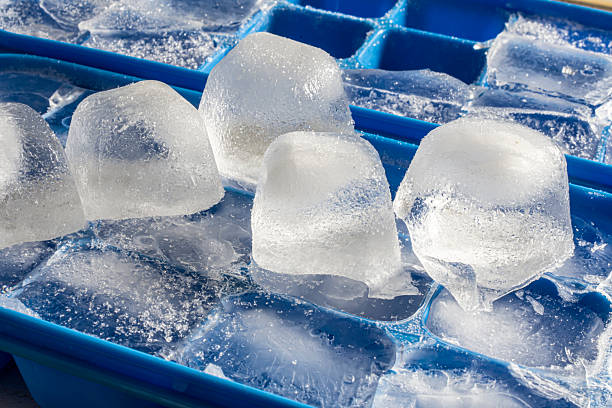
Silicone Ice Cube Tray with Lid: Key Features Buyers Should Compare
A silicone ice cube tray with lid offers more than a convenient way to freeze water. For kitchenware brands, 小売業者, and wholesale buyers, the lid design can influence spill resistance, stacking, freezer organization, and everyday usability. However, not all covered ice cube trays provide the same level of protection or convenience. Tray flexibility, lid fit, cavity shape, material quality, and cleaning requirements all affect the final product experience.
When sourcing silicone ice cube trays in bulk, buyers should evaluate the complete design rather than focusing on the lid alone. A well-matched tray-and-lid combination should suit the intended freezing method, storage conditions, target customer, and retail price positioning.
This guide explains the key features buyers should compare before selecting a covered silicone ice cube tray for a private-label product line or wholesale assortment.
1. Why Does a Silicone Ice Cube Tray Need a Lid?
A lid can improve the usability of an ice cube tray, but its actual benefits depend on how the lid is designed and how the product is used.
Reduce Exposure to Freezer Odors and Contamination
A properly fitted lid helps limit direct exposure to airborne particles, spills from nearby items, and some freezer odors. This can be useful in busy household freezers and shared food-storage environments.
However, a conventional snap-on or resting lid should not automatically be described as airtight or leakproof. Those claims require appropriate design features and supporting test results.
Support Stacking and Space Management
Freezer space is often limited. A lid with a reasonably flat upper surface may allow trays to be stacked more conveniently, depending on the tray’s filled weight, rigidity, and lid stability.
For buyers targeting compact kitchens, small refrigerators, or organized freezer storage, stackability can be a meaningful product differentiator.
Improve Handling and Reduce Spills
A lid can help contain splashes when the tray is moved carefully. Nevertheless, silicone trays are flexible, and water may escape if the tray bends or tilts before freezing.
If spill resistance is a key selling point, evaluate the combined tray, lid, and handling design rather than assuming the lid alone prevents leakage.
2. Lid Design: The First Feature Buyers Should Compare
The lid is often the most visible difference between covered and uncovered ice cube trays. Its fit and construction influence ease of use, storage, and cleaning.
Snap-On, Resting, and Flexible Lids
Different lid styles serve different purposes.
| Lid Design | Potential Benefits | Buyer Considerations |
|---|---|---|
| Resting lid | Simple structure and easy removal | May not stay in place when tilted |
| Snap-on lid | More secure attachment when properly designed | Check removal force, fit consistency, and wear |
| Flexible silicone lid | Flexible construction and potential material coordination | Confirm shape retention and cleaning requirements |
| Rigid plastic lid | May provide a stable stacking surface | Check material compatibility, fit, and dishwasher instructions |
These categories are general design options. Actual performance depends on the specific construction and materials used.
For wholesale orders, request samples and test the lid repeatedly. Check whether it attaches consistently, remains in place during normal handling, and can be removed without excessive force.
Does the Lid Need to Be Leakproof?
Not every covered ice cube tray needs to be leakproof. Some consumers primarily want protection during stationary freezer storage, while others may want to fill and carry the tray to the freezer with less risk of spilling.
These are different use cases.
If a supplier describes a product as leakproof or spillproof, ask for the test method and usage conditions. Evaluate the filled tray in the actual orientation and handling conditions relevant to the claim.
For example, a tray that performs well when placed flat may still leak when tilted or carried vertically.
Lid Fit and Tray Compatibility
The lid should match the tray’s dimensions and perimeter geometry. A poorly matched lid can lift at the corners, shift during stacking, or become difficult to attach.
Buyers should inspect:
- Overall lid dimensions.
- Fit around the tray perimeter.
- Corner alignment and edge coverage.
- Stability during stacking.
- Ease of opening and closing.
- Fit consistency across production samples.
For custom products, approve the tray and lid as a complete set rather than validating the two components independently.
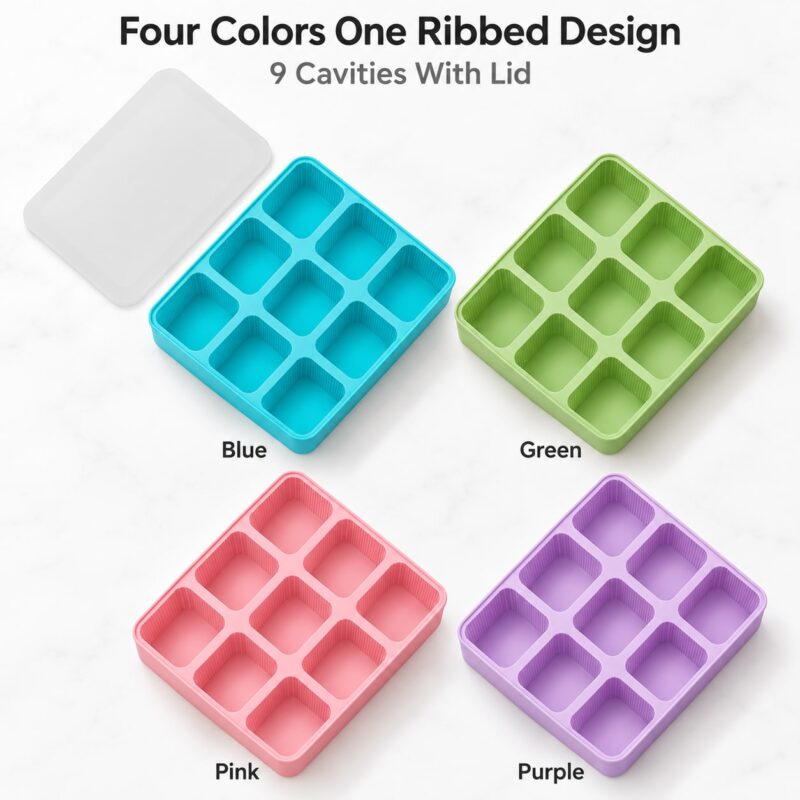
3. Silicone Material Quality and Food-Contact Safety
Material quality is central to any food-contact kitchenware product. A flexible tray should retain its intended shape during normal use and meet the applicable requirements for its target market.
Verify Food-Contact Documentation
The phrase “food grade silicone” is not sufficient by itself to demonstrate regulatory compliance.
B2B buyers should request documentation that identifies the supplied material and supports its intended food-contact use. The applicable requirements depend on the destination market, product construction, and conditions of use.
For products sold in the United States, buyers should review the relevant FDA food-contact framework and determine which requirements apply to the material and intended application. Other markets may have different rules.
Check that documentation corresponds to the actual product or material being supplied. Do not assume that a supplier’s general statement automatically covers every color, formulation, or component.
Odor and Taste Considerations
Unacceptable odor can undermine customer confidence, even when the product has a functional design.
When reviewing samples, check for unusual persistent odors and inspect whether the tray or lid transfers unwanted odors to ice under representative use conditions. Any testing should follow an agreed method rather than relying solely on a quick smell check.
Also review the supplier’s cleaning and first-use instructions so that customers understand how to prepare the product before use.
Flexibility, Recovery, and Shape Retention
Silicone flexibility helps users release ice cubes, but excessive deformation can make filling and carrying more difficult.
Evaluate the tray’s ability to recover its intended shape after normal handling. Pay particular attention to the perimeter, base, and cavity walls.
A tray may benefit from a reinforced rim or a compatible rigid support if the intended use requires more stable handling. The appropriate design depends on cavity size, tray dimensions, and the product’s target market.
4. Ice Cube Release: Compare Cavity Design and Flexibility
Easy ice release is one of the main reasons buyers consider silicone ice cube trays.
Cavity Shape and Size
Cavity geometry affects ice shape, portion size, and compatibility with different drinks or storage containers.
Common options include:
- Small cubes for everyday beverages.
- Standard cubes for general household use.
- Large cubes for drinks that benefit from slower melting.
- Rectangular or elongated cavities for selected bottles and drinkware.
- Specialty shapes for gift sets or differentiated retail products.
Actual freezing time and melting behavior depend on the ice dimensions, freezer conditions, drink temperature, and other factors. A larger cube may melt more slowly under comparable conditions, but the exact performance should not be guaranteed without testing.
Flexible Walls and Base Structure
A flexible silicone cavity can help users release ice by gently pressing or twisting the tray. The ease of release depends on the material, cavity shape, ice size, and temperature.
Buyers should check whether the tray can be flexed without excessive force and whether the cavities return to their intended shape afterward.
If the tray is very soft, a user may find it difficult to transport when filled with water. Consider whether a reinforced rim, rigid frame, or separate support tray would improve the product experience.
Avoiding Cracks and Unwanted Deformation
Ice release should not require forceful bending that could damage the tray or create an inconvenient user experience.
Test representative samples after repeated freeze-and-release cycles. Inspect the cavity corners, rim, lid, and any joined components for visible changes or damage.
Do not assume that all silicone formulations have identical cold-temperature performance or service life. Request the manufacturer’s applicable temperature and care guidance.
5. Stackability and Freezer Storage
Stackable designs can help users organize multiple trays, especially when they regularly freeze different ice sizes or flavored ice portions.
A Stable Stacking Surface
A flat lid may help distribute the weight of another tray, but stacking stability also depends on the tray’s base, perimeter, filled weight, and resistance to bending.
Check whether a filled tray remains stable when placed on a level freezer shelf. Then test the intended stacking arrangement under normal storage conditions.
Tray Height and Storage Footprint
The overall product height includes the tray, cavities, and lid. A low-profile design may help reduce storage space, but a shallower cavity may not meet customers’ preferred ice size.
Compare the external dimensions and usable cavity capacity before selecting a design for retail packaging.
For wholesale buyers, packaging dimensions also matter because they affect carton configuration, warehouse storage, and shipping efficiency.
Lid Removal and Everyday Convenience
A tightly fitted lid may stay in place well but can be difficult for some users to remove. A loose lid may be easier to open but less stable during handling.
The best balance depends on the target customer and intended use. Test lid removal and replacement with multiple samples rather than approving the design based only on appearance.
6. Cleaning, Durability, and Maintenance
A reusable ice cube tray should be practical to clean and maintain throughout normal use.
Check Cleaning Requirements
Review the manufacturer’s instructions for the tray and lid separately. Different components may use different materials and have different dishwasher or temperature limitations.
Look for designs with accessible corners and surfaces that are easy to rinse. Deep, narrow cavities or complicated lid structures may require more attention during cleaning.
Inspect After Repeated Use
For product evaluation, consider a simple repeat-use protocol covering:
- Filling and freezing.
- Removing ice from the cavities.
- Attaching and removing the lid.
- Washing and drying.
- Repeating the cycle for an agreed number of uses.
- Inspecting for deformation, damage, 臭い, and fit changes.
The protocol should reflect the intended product claims and customer use conditions. A short sample test can reveal design issues, but it does not establish a universal service-life guarantee.
Avoid Unsupported Performance Claims
Terms such as “unbreakable,” “lifetime durability,” and “100% leakproof” require strong supporting evidence. Buyers should use claims that match the product’s demonstrated performance and the manufacturer’s documented specifications.
Clear, verifiable product information can also reduce misunderstandings between suppliers, 販売代理店, and end customers.
7. How to Choose the Right Silicone Ice Cube Tray with Lid for Your Market
Different customer groups prioritize different features. Before selecting a product, identify the main use case and match the specification accordingly.
| Target Market | Features to Prioritize | Important Checks |
|---|---|---|
| Everyday household use | Easy release, simple cleaning, practical lid | Usability and routine care |
| Compact kitchens | Stackable design, efficient footprint | Stacking stability and overall height |
| Premium drinkware and bar accessories | Large or specialty ice shapes, refined appearance | Cavity dimensions and consistent shape |
| Gift and promotional products | Color options, coordinated packaging, distinctive design | Customization feasibility and packaging |
| Private-label kitchenware brands | Consistent quality, documentation, branding options | Samples, specifications, and production controls |
| Wholesale distributors | Clear product differentiation and reliable packaging | Carton configuration and batch consistency |
These are general sourcing guidelines. The most suitable configuration depends on the customer’s needs, the destination market, and the product’s verified capabilities.
8. What B2B Buyers Should Ask an OEM Silicone Ice Tray Manufacturer
For private-label and bulk orders, a structured supplier evaluation can help prevent specification gaps before production.
Product Specifications
Request a specification sheet that includes:
- Overall tray dimensions.
- Number and dimensions of cavities.
- Approximate capacity per cavity, where available.
- Tray and lid materials.
- Wall and base construction.
- Applicable temperature limits.
- Cleaning and maintenance instructions.
Where capacity is important, confirm how it is measured and whether the value refers to the entire tray or individual cavities.
Customization and Branding
Depending on the supplier’s capabilities, possible customization options may include:
- Custom cavity shapes and dimensions.
- Selected product colors.
- Logo placement or branding on suitable surfaces.
- Coordinated tray-and-lid colors.
- Retail packaging and labeling.
Not all options are available for every design. Discuss tooling requirements, sampling, order quantities, production tolerances, and packaging specifications before finalizing the project.
Quality Control and Batch Consistency
For repeat orders, agree on an approved reference sample and written acceptance criteria.
A practical inspection plan may cover material documentation, dimensions, cavity consistency, color, surface condition, lid fit, stacking stability, and packaging.
If the lid is a key product differentiator, include specific checks for attachment, removal, and performance under the intended handling conditions.
Packaging and Distribution
Consider how the product will be protected and presented during shipping and retail display.
Check whether the packaging prevents contamination and surface damage, provides adequate product information, and meets the labeling requirements of the destination market.
For wholesale orders, also confirm carton quantities, outer-carton dimensions, and any barcode or private-label requirements.
9. Bulk Purchasing Checklist
Before approving a silicone ice cube tray with lid, use the following checklist to organize supplier evaluation.
| Checkpoint | Questions to Ask |
|---|---|
| Lid fit | Does the lid attach consistently and remain in place during normal use? |
| Spill resistance | What handling conditions does the product support, and are claims documented? |
| Material safety | Is product-specific food-contact documentation available for the target market? |
| Ice release | Can users release ice without excessive bending or force? |
| Cavity design | Do the cube dimensions and shapes match the target use case? |
| Shape retention | Does the tray recover its shape after normal handling? |
| Stackability | Can filled trays be stacked as intended without excessive movement? |
| Cleaning | Are care instructions clear for both the tray and lid? |
| Durability | Has the design been assessed over repeated freeze, release, and cleaning cycles? |
| カスタマイズ | Are the requested colors, shapes, branding, and packaging feasible? |
| Quality control | Are specifications and acceptance criteria documented? |
| Logistics | Are packaging dimensions and carton quantities suitable for distribution? |
A sample approval process should verify the features that matter most to the intended customer. Where a performance claim is commercially important, define the test conditions and acceptance criteria before placing a large order.
10. よくある質問
What is the main advantage of a silicone ice cube tray with a lid?
A lid can help limit direct exposure to freezer contaminants and odors, support organized storage, and make stacking more convenient. Its ability to prevent spills depends on the fit, construction, and handling conditions.
Are all silicone ice cube trays with lids leakproof?
いいえ. A lid that covers the tray does not necessarily create a sealed container. Buyers should distinguish between a cover intended for stationary storage and a design tested for spill resistance under specific handling conditions.
Is a silicone lid better than a plastic lid?
Neither option is universally better. Silicone lids can offer flexibility, while rigid plastic lids may provide a more stable stacking surface. The best choice depends on fit, usability, material requirements, cleaning instructions, and target positioning.
What should wholesalers check before ordering silicone ice cube trays in bulk?
Evaluate food-contact documentation, dimensions, cavity consistency, lid fit, ice release, cleaning requirements, 耐久性, packaging, and customization options. Sample testing and written specifications are especially important for repeat orders.
Can a silicone ice cube tray with lid be customized for a private-label brand?
Customization may be possible for colors, cavity designs, branding, and packaging, depending on the supplier’s production capabilities. Buyers should confirm tooling needs, minimum order quantities, sampling arrangements, and the feasibility of each requested feature.
Conclusion
A silicone ice cube tray with lid should be evaluated as a complete product system. Lid fit, spill resistance, cavity design, material documentation, flexibility, stacking stability, and cleaning requirements all influence its suitability for different customers.
B2Bバイヤー向け, the best sourcing decision comes from matching these features to a clearly defined use case, verifying product specifications, and testing samples before bulk production. Yongcheng can be contacted to discuss food-grade silicone kitchenware and potential OEM or custom ice cube tray options based on your target market, design requirements, and order specifications.