

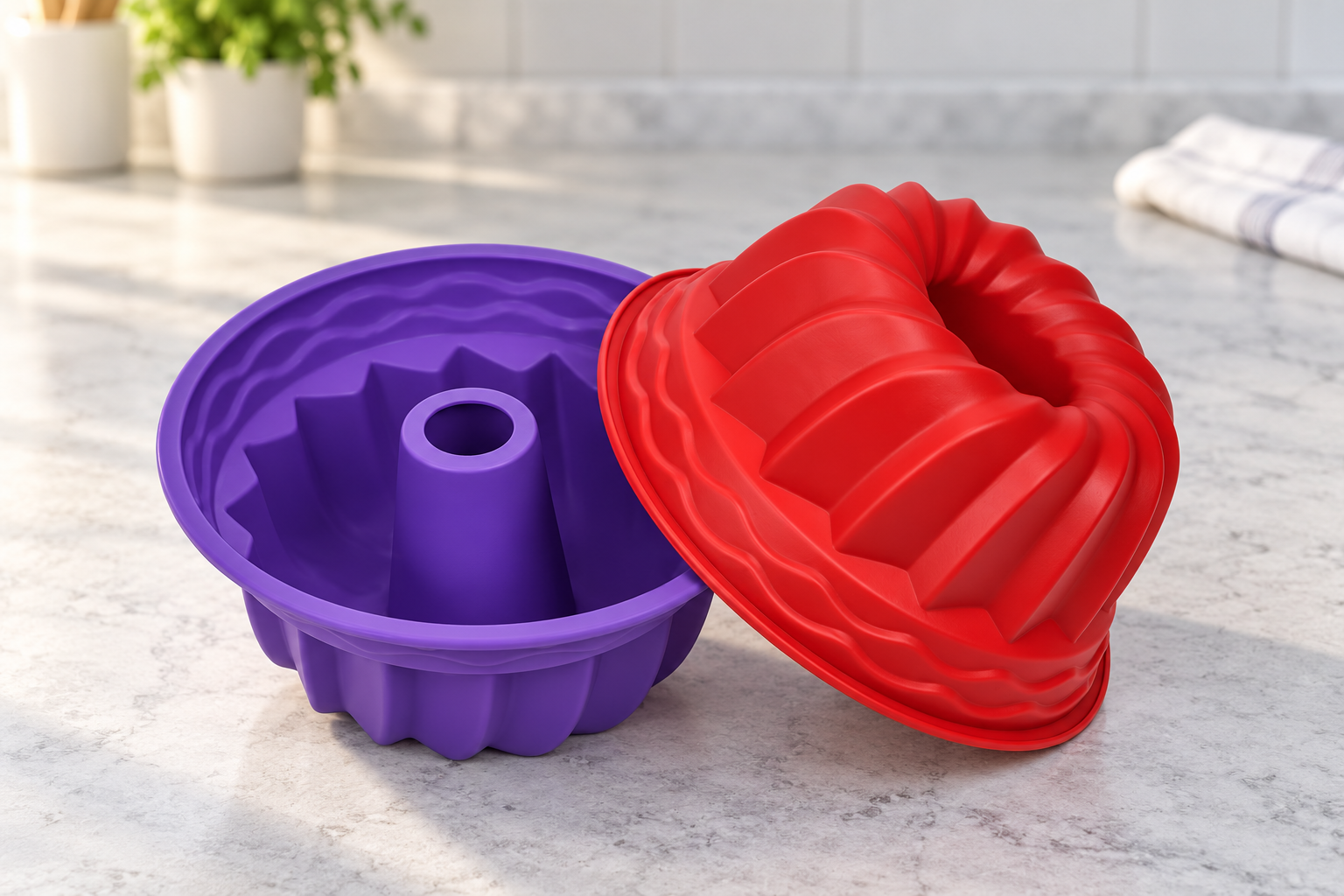
A spiral ring cake mold gives a bakeware collection a different visual role from a tray of individual portions. Its single cavity, central tube and fluted walls create a distinctive product format, but a wholesale decision needs more than an attractive photograph. Buyers should know exactly which dimensions, finish and sample results they are approving.
This guide uses Yongcheng’s YCD06 silicone spiral cake mold as a concrete reference and explains the details to settle for an OEM, private-label or wholesale project.
The YCD06 Model at a Glance
- Modelo: YCD06.
- Format: silicone spiral ring cake mold with a central tube.
- Outer diameter: 24.5 cm.
- Height: 11 cm.
These dimensions identify this model; they should not be applied to other ring molds. Confirm measurement points and tolerances against the drawing and approved sample. Capacity, available colors and project-specific options should be confirmed separately. The cover is a styled product illustration based on the supplied product photo, not a performance-test image.
1. Check the Finished Shape You Want to Sell
Start with the desired cake presentation. Ask for clear views of the cavity, central tube, rim and outside wall so that the pattern is understandable before sampling. A photograph of an empty mold shows geometry; it does not establish that every recipe will reproduce the same detail.
Evaluate the sample with the intended batter, fill level and preparation method. Review the finished cake’s edges, grooves and central opening after following the agreed cooling and removal instructions. Keep photographs of the accepted sample result as part of the order specification.
2. Separate Diameter From Usable Capacity
Outer diameter alone is not a capacity specification. The central tube, wall profile and depth all influence the space available inside the mold. Do not calculate an advertised serving count from diameter alone, or assume that two molds described as the same nominal size hold the same amount.
If a recipe volume or serving target is important to your retail range, state it in the inquiry and confirm the appropriate measurement method during sampling. Also check the complete footprint against the equipment and support tray used by the intended customer.
3. Agree on Handling and Release Evaluation
Ask how the mold should be supported when filled, and whether any support accessory is included. Review rim stability, access around the central tube and the removal method using the actual sample. Release depends on the product, recipe and method, so avoid promising effortless results for every cake without testing.
An agreed inspection plan can cover dimensions, visible surface defects, edge finish, consistency of the fluted pattern and sample performance under the intended conditions. Keep the approved sample available for repeat-order comparison rather than relying only on a catalog image.
4. Keep Retail Claims Specific and Documented
Before approving packaging, request the material specification, relevant food-contact documentation and product-specific use instructions for the destination market. Make sure any report or declaration applies to the material or article being supplied, not merely a visually similar product.
Temperature limits and claims about ovens, freezers, microwaves or dishwashers must be confirmed for the selected item. The dimensions above do not establish those properties. Write care instructions from the agreed evidence and intended use, rather than copying another brand’s label.
5. Build a Practical OEM and Packaging Brief
For a private-label range, distinguish between using an existing model and developing a new shape. Discuss the feasibility of color matching, branding position and packaging before preparing final artwork. Changes to the spiral pattern, wall geometry or central tube may need a separate tooling review.
Packaging should identify the selected model and contain the instructions customers need. Ask for a packing sample that protects the rim and shape in storage and transit. Confirm unit packing, carton configuration, minimum quantity, sample plan and timing for the version you actually intend to order; none should be assumed from another item in the range.
Frequently Asked Questions
Does a spiral cake mold replace a multi-cavity tray?
No. A ring mold is a single shaped-cake format, while a multi-cavity tray separates individual portions. Choose according to the presentation, recipe and customer you are serving. For the multi-cavity format, see our 12-cavity silicone baking mold buyer’s guide.
Can an existing design be used for a private-label project?
It can be the starting point for a discussion. Confirm which branding, color and packing options are feasible for that model and order quantity before treating them as included.
What should I send to request a suitable sample?
Send the model or reference image and your intended use. Include the target recipe or capacity, destination market and customization needs if available. The specification can then be narrowed down before a sample is approved.
Plan Your Next Bakeware Project
Yongcheng is based in Dongguan, China, and supports silicone-product wholesale and OEM/ODM projects. Browse our baking mold range or send your cake mold requirements. Refer to YCD06 when discussing the dimensions in this guide so our team can review the correct item with you.