

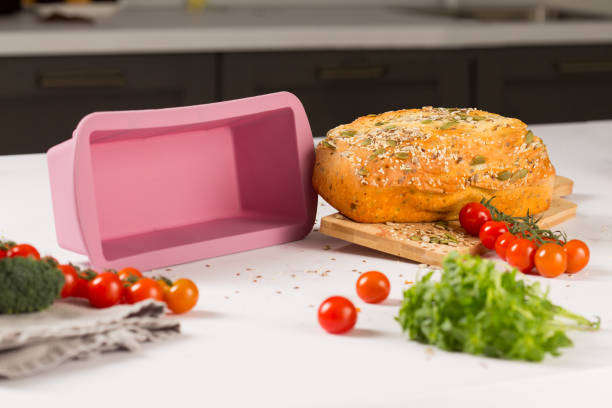
For bakery brands, kitchenware retailers, and wholesale buyers, choosing between silicone bread molds and silicone loaf pans requires more than comparing product names. Their cavity structures, dimensions, flexibility, and intended applications can affect baking results, handling, storage, and customer satisfaction. Working with a qualified silicone bread mold manufacturer can help businesses evaluate these factors before developing a private-label or wholesale bakeware collection.
Although the terms silicone bread mold and silicone loaf pan are sometimes used interchangeably, they can describe different product designs. Bread molds may include mini molds, multi-cavity designs, and specialty shapes, while loaf pans generally feature an elongated cavity for traditional loaf-shaped baked goods.
For B2B buyers, understanding these differences is essential for selecting suitable products, defining specifications, and reducing sourcing risks.
1. What Is a Silicone Bread Mold?
A silicone bread mold is a flexible baking mold designed to shape bread and other suitable baked products. Depending on its design, it may feature one cavity, multiple cavities, or a specialty shape.
Common Structural Features
Silicone bread molds may include:
- Single-cavity or multi-cavity configurations.
- Rectangular, rounded, or specialty-shaped cavities.
- Flexible sidewalls for easier product release.
- Different base and wall thicknesses.
- Smooth or textured interior surfaces, depending on the design.
Because this category covers a wide range of products, buyers should not assume that all silicone bread molds have the same capacity, structural stability, or baking performance.
Typical Applications
Silicone bread molds may be used for:
- Mini bread and individual portions.
- Specialty-shaped baked products.
- Small-batch home baking.
- Selected quick breads and cake-like recipes.
- Customized bakeware collections for retail and private-label brands.
The appropriate design depends on the recipe, desired product shape, cavity dimensions, and handling requirements.
2. What Is a Silicone Loaf Pan?
A silicone loaf pan generally features an elongated cavity designed to produce a traditional loaf shape. It is commonly used for banana bread, quick breads, pound cakes, and other recipes that require a loaf-style baking container.
Common Structural Features
A silicone loaf pan typically has:
- An elongated rectangular cavity.
- A defined base and sidewalls.
- A rim that helps users handle the pan.
- Flexible construction for easier demolding.
- Optional reinforced edges or a support-compatible design.
Unlike a rigid metal pan, a flexible silicone loaf pan may deform when filled with liquid batter. The degree of deformation depends on its dimensions, wall thickness, geometry, and reinforcement.
Typical Applications
Silicone loaf pans are commonly considered for:
- Banana bread and quick breads.
- Loaf cakes and pound cakes.
- Selected yeast-bread recipes.
- Home baking and small-scale commercial applications.
- Reusable baking products for kitchenware retailers.
For buyers targeting consumers who value consistent loaf shapes, filled-pan stability should be an important part of product evaluation.
3. Silicone Bread Molds vs. Silicone Loaf Pans: Key Differences
The primary distinction is the relationship between product geometry and intended use. Some products overlap both categories, so the following comparison should be treated as a general guide rather than a universal classification.
| Comparison Factor | Silicone Bread Molds | Silicone Loaf Pans |
|---|---|---|
| Product scope | Broad category covering different shapes and cavity layouts | Usually designed for elongated loaves |
| Cavity structure | Single, multiple, or specialty cavities | Generally one elongated cavity |
| Common applications | Mini bread, specialty shapes, selected bread products | Quick breads, loaf cakes, and suitable bread recipes |
| Portion control | Determined by cavity count and size | Determined by pan capacity and recipe |
| Shape retention | Depends on geometry and reinforcement | Important for maintaining a consistent loaf profile |
| Flexibility | Varies by product design | Varies by product design and dimensions |
| Demolding | Flexibility can assist product release | Flexibility can assist release along the loaf’s sides |
| Storage | Some designs can be nested or folded when appropriate | Flexible designs may simplify storage |
| Main sourcing priorities | Shape variety, cavity consistency, and ease of cleaning | Capacity, dimensions, filled-pan stability, and loaf shape |
For wholesale sourcing, the actual product drawing and specifications are more useful than the product name alone. A conventional silicone loaf pan may also be described as a silicone bread mold by a supplier.
4. How Mold Structure Affects Baking Performance
The structure of a silicone baking mold influences how it holds batter, maintains its shape, and releases baked goods. Buyers should evaluate the complete design rather than focusing on a single specification.
Cavity Dimensions and Capacity
Cavity geometry affects the dimensions and profile of the finished product. A deep cavity may accommodate more batter, while a wider or shallower cavity produces a different shape.
When evaluating silicone bread molds or loaf pans, request:
- Overall length, width, and height.
- Internal cavity dimensions.
- Usable capacity, where available.
- Wall and base thickness.
- Number of cavities per mold.
Capacity should be considered alongside the intended recipe. Batter density, expansion, and filling level can all influence the finished product.
Wall Thickness and Structural Stability
Silicone is flexible, but excessive deformation can make a filled mold difficult to move safely.
A thicker wall or reinforced rim may improve handling stability, but thickness alone does not guarantee better performance. Material formulation, mold geometry, and overall construction also matter.
For products intended for liquid batter, test whether the filled mold maintains its shape during lifting and transfer to the oven. A compatible rigid tray may be appropriate for some designs.
Heat Distribution and Finished Texture
Silicone bakeware differs from metal bakeware in thermal behavior. The final result depends on the recipe, oven conditions, pan dimensions, airflow, and material construction.
A silicone mold does not automatically produce faster baking, more uniform browning, or the same crust as a metal pan. Recipe adjustments may be necessary when changing materials or cavity sizes.
For B2B product development, compare samples under representative baking conditions. Evaluate internal doneness, crust development, loaf shape, and release performance before finalizing the product specification.
5. Demolding, Cleaning, and Reusability
Ease of release is an important selling point for silicone bakeware, but performance varies by design and application.
What Affects Demolding Performance?
Flexible silicone can help users release baked goods without relying on a rigid container. However, results depend on several factors:
- Interior surface finish.
- Cavity geometry and corner design.
- Recipe composition.
- Cooling time before demolding.
- The structure and moisture content of the finished product.
Soft bread or delicate baked goods may deform if removed before they have cooled sufficiently. A flexible mold alone cannot guarantee damage-free release.
Cleaning and Maintenance
Many silicone baking products can be cleaned with warm water and dish detergent, subject to the manufacturer’s care instructions. Buyers should verify dishwasher compatibility rather than assuming it applies to every product.
For repeated-use applications, assess whether the mold is easy to clean around corners and edges. Sample evaluations can also include surface inspection, odor checks, and dimensional checks after normal cleaning and use.
Avoid making universal claims about service life. Durability depends on the material, construction, handling, cleaning method, and operating conditions.
6. How to Choose the Right Silicone Bakeware for Your Market
The best choice depends on your customers, intended recipes, price positioning, and product assortment.
Choose Silicone Bread Molds for Shape Variety
Bread molds with different cavity configurations may be suitable for businesses targeting:
- Mini or individually portioned baked goods.
- Specialty baking and creative product shapes.
- Retailers building a varied bakeware assortment.
- Private-label brands seeking differentiated product designs.
For these products, cavity uniformity, surface quality, release performance, and packaging efficiency are key evaluation points.
Choose Silicone Loaf Pans for Traditional Loaf Baking
Loaf pans may be a better fit when your customers primarily need:
- Conventional loaf-shaped baked goods.
- Quick-bread and loaf-cake preparation.
- Familiar, versatile kitchenware products.
- Standardized dimensions for retail listings and packaging.
In this category, internal dimensions, usable capacity, filled-pan stability, and consistency between batches deserve particular attention.
Build a Combined Product Range
Retailers and private-label brands do not necessarily need to select only one product category. A range that includes standard loaf pans, mini bread molds, and specialty molds can serve different consumer needs.
Before expanding the range, compare sample performance, target retail positioning, packaging requirements, and minimum order quantities for each design.
7. What to Ask a Silicone Bread Mold Manufacturer Before Ordering
For B2B buyers, successful sourcing requires more than a suitable shape. Material documentation, manufacturing consistency, customization options, and packaging should also be reviewed.
Confirm Material and Food-Contact Documentation
Ask the supplier to identify the specific silicone material and provide applicable food-contact documentation for the intended sales market.
Requirements vary by jurisdiction and intended use. For products sold in the United States, buyers should review the relevant FDA food-contact framework and confirm which requirements apply to the specific material and conditions of use.
Do not rely on the phrase “food grade” alone. Request supporting documentation and verify that it applies to the supplied product and material formulation.
Verify Dimensions and Quality Standards
Before bulk production, confirm the approved specifications for:
- Overall and internal dimensions.
- Dimensional tolerances.
- Wall and base thickness.
- Cavity count and capacity.
- Material and color.
- Surface quality and acceptable defects.
- Applicable temperature limits and care instructions.
For repeat orders, maintain an approved reference sample and documented acceptance criteria. This helps buyers assess whether later production batches remain consistent with the approved design.
Discuss OEM and Customization Requirements
Businesses developing private-label bakeware may wish to discuss:
- Custom cavity shapes and dimensions.
- Available color options.
- Logo placement, where technically feasible.
- Retail packaging and labeling.
- Product sets for different sales channels.
Customization capabilities vary by manufacturer and product design. Confirm tooling requirements, sampling arrangements, minimum order quantities, lead times, and custom-tooling ownership before committing to production.
Review Packaging and Bulk Logistics
Flexible silicone products still need suitable packaging to protect them from contamination, surface damage, and deformation during storage and transport.
For wholesale orders, check:
- Individual or retail-ready packaging.
- Labeling and barcode requirements.
- Carton dimensions and stacking arrangements.
- Protection against dust and handling damage.
- Packing quantities per master carton.
These details can affect warehouse handling, shipping efficiency, and retail readiness.
8. Bulk Quality Inspection Checklist
A structured inspection plan helps buyers evaluate whether the selected silicone bakeware meets agreed specifications.
| Inspection Item | What to Check | Purchasing Purpose |
|---|---|---|
| Material documentation | Product-specific food-contact records | Supports compliance review |
| Dimensions | Internal and external measurements | Confirms fit and capacity |
| Wall construction | Thickness, flexibility, and rim design | Assesses handling stability |
| Surface quality | Tears, visible defects, residue, or unacceptable odor | Checks product workmanship |
| Demolding | Release using representative recipes | Evaluates practical usability |
| Shape retention | Stability when filled and moved | Helps assess spill and deformation risks |
| Cleaning | Residue removal and care requirements | Supports repeated use |
| Batch consistency | Dimensions, color, and workmanship | Reduces variation between orders |
| Packaging | Protection, labeling, and carton configuration | Supports distribution and retail presentation |
Where possible, agree on inspection methods and acceptance criteria before mass production. Sample testing is valuable, but it should complement—not replace—appropriate production controls and batch inspections.
9. Frequently Asked Questions
Are silicone bread molds and silicone loaf pans the same?
Not always. Silicone bread molds is a broad term that may include different shapes and cavity layouts. Silicone loaf pans usually feature an elongated cavity for traditional loaf-shaped products. Some products fit both descriptions, so buyers should compare dimensions and intended uses.
Are silicone loaf pans suitable for yeast bread?
Some are suitable, but results depend on the pan design, recipe, and desired loaf structure. Before selecting a product for regular use, evaluate dough expansion, sidewall support, crust development, and finished shape.
Do silicone bread molds need a baking tray?
Some flexible molds benefit from a rigid tray or compatible support, especially when filled with liquid batter. Whether support is necessary depends on the mold’s dimensions, construction, and handling method. Follow the manufacturer’s instructions.
What should wholesalers check before buying silicone loaf pans in bulk?
Review material documentation, dimensions, wall construction, filled-pan stability, demolding performance, cleaning instructions, batch consistency, packaging, and customization terms. Test samples with representative recipes before approving the final specifications.
Can a silicone bread mold manufacturer provide OEM products?
Some manufacturers offer OEM or custom production, but available services vary. Buyers should confirm mold-design options, tooling arrangements, colors, logo placement, packaging, minimum order quantities, and documentation with the specific supplier.
Conclusion
Silicone bread molds and silicone loaf pans have overlapping applications, but their cavity structures and intended uses can differ. Bread molds may cover a broader range of shapes and portion sizes, while loaf pans generally focus on elongated baked products and consistent loaf dimensions. In both categories, cavity geometry, flexibility, filled-pan stability, recipe compatibility, and cleaning requirements matter more than the product name alone.
For B2B buyers, a reliable sourcing decision starts with clear specifications, representative sample testing, appropriate food-contact documentation, and agreed quality criteria. Businesses planning a private-label baking collection can contact Yongcheng to discuss food-grade silicone bakeware options and potential customization based on their product requirements and target markets.